
Table of Contents
Mains-PYQ-GSM3-Eco-2026-Digital-Rupee-CBDC
- What do you mean by Digital Rupee? In this context, explain the working and progress of India’s Central Bank Digital Currency (CBDC). (10m, 150words, CSM’26)
- डिजिटल रुपया से आप क्या समझते हैं? इस संदर्भ में, भारत की केंद्रीय बैंक डिजिटल मुद्रा (सीबीडीसी) की कार्यप्रणाली और प्रगति की व्याख्या कीजिए। (10m, 150words, CSM’26)
✍️ Intro
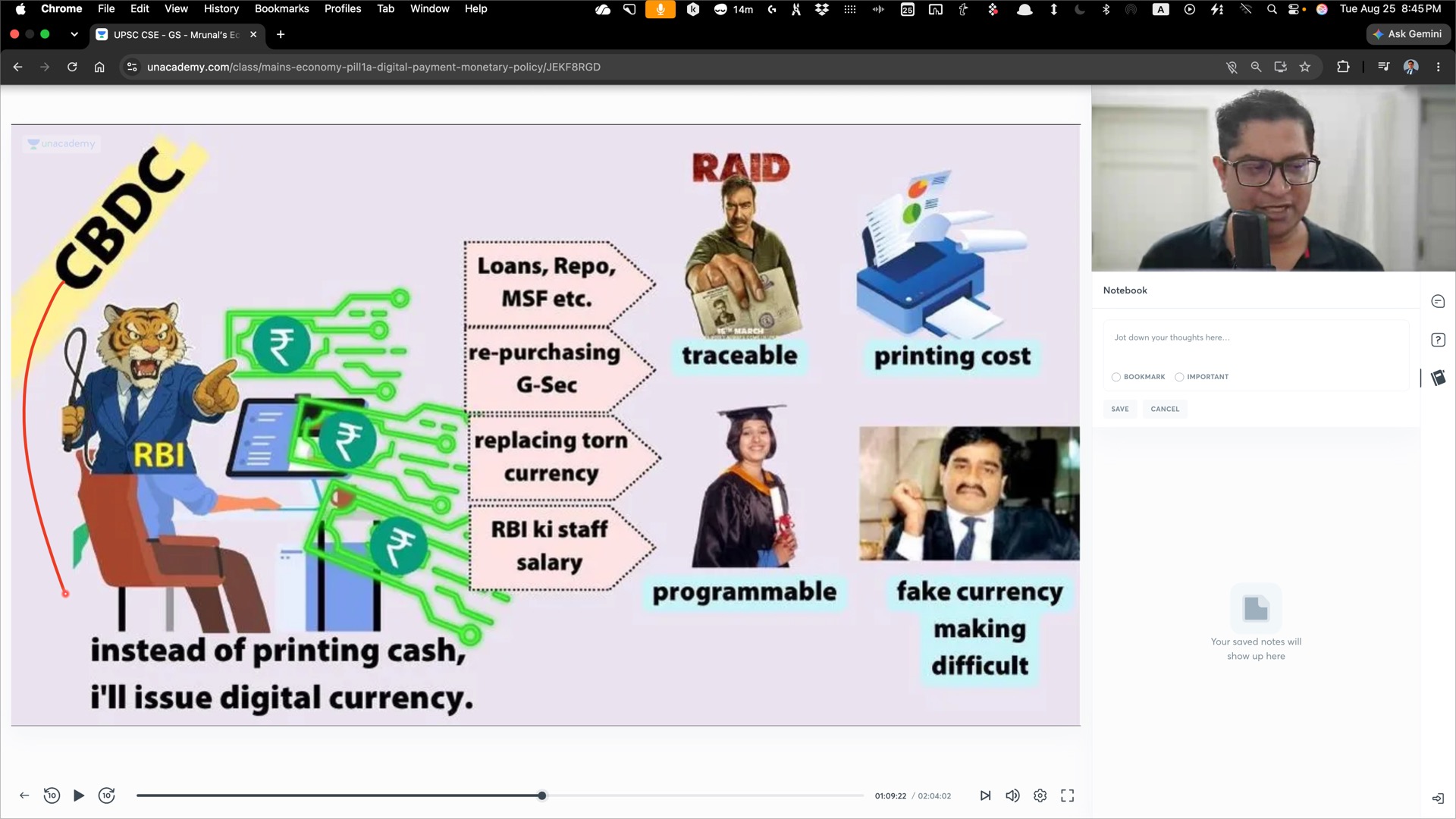
(Definition:) CBDC is when the central bank issues currency in digital rather than printed format.
(Origin) Union Budget 2022 announced this initiative for India by amending RBI Act, 1934
⚙️ Body 1 — Features

- Indian CBDC (e₹) uses blockchain-based / distributed ledger technology.
- It is a digital token that represents legal tender.
- RBI is the sole issuing authority — e₹ is a liability of the RBI/
- It is distributed through financial intermediaries — banks.
- Like cash, e₹ earns no savings interest.
- It offers the trust, safety and settlement finality of physical cash, but in digital form.
📈 Body 2 — Progress

- Two pilots are running — (i) wholesale (e₹-W) for interbank settlement and government securities transactions; and (ii) retail (e₹-R), for general public use.
- To use e₹-R, a person installs a digital wallet app via a participating bank and transfers money into it.
- China’s e-CNY is an interest bearing CBDC whereas India’s e₹ is non-interest bearing.
- RBI is experimenting with programmability — targeted subsidy delivery, offline use in low-connectivity areas, and geo-fencing.
- Concerns remain around digital divide, financial literacy, access points, and cyber-security risks.
✍️ Conclusion
A well-implemented Digital Rupee can help curb fake currency, tax evasion, and leakages in subsidy delivery, while reducing the cost of printing and managing physical currency. Indeed, appreciable step by the RBI.
Yes Covered in Mrunal’s Economy Lectures
Click me to Join Mrunal’s courses at Unacademy
📝 हिंदी अनुवाद (Hindi Translation)
✍️ परिचय
(परिभाषा:) CBDC वह है जब केंद्रीय बैंक मुद्रा को मुद्रित प्रारूप के बजाय डिजिटल रूप में जारी करता है।
(उत्पत्ति) Union Budget 2022 ने RBI Act, 1934 में संशोधन करके भारत के लिए इस पहल की घोषणा की
⚙️ मुख्य भाग 1 — विशेषताएं
- भारतीय CBDC (e₹) ब्लॉकचेन-आधारित / वितरित लेजर तकनीक का उपयोग करता है।
- यह एक डिजिटल टोकन है जो कानूनी निविदा का प्रतिनिधित्व करता है।
- RBI एकमात्र जारीकर्ता प्राधिकार है – e₹ RBI की देयता है।
- इसे वित्तीय मध्यस्थों – बैंकों के माध्यम से वितरित किया जाता है।
- नकद की तरह, e₹ कोई बचत ब्याज नहीं कमाता।
- यह भौतिक नकदी का विश्वास, सुरक्षा और निपटान की अंतिमता प्रदान करता है, लेकिन डिजिटल रूप में।
📈 मुख्य भाग 2 — प्रगति
- दो पायलट चल रहे हैं – (i) थोक (e₹-W) अंतर-बैंक निपटान और सरकारी प्रतिभूतियों के लेनदेन के लिए; और (ii) खुदरा (e₹-R), सामान्य जनता के उपयोग के लिए।
- e₹-R का उपयोग करने के लिए, एक व्यक्ति एक भाग लेने वाले बैंक के माध्यम से एक डिजिटल वॉलेट ऐप स्थापित करता है और इसमें पैसा स्थानांतरित करता है।
- चीन की e-CNY एक ब्याज-वहन CBDC है जबकि भारत की e₹ गैर-ब्याज-वहन है।
- RBI programmability के साथ प्रयोग कर रहा है – लक्षित सब्सिडी वितरण, कम-कनेक्टिविटी क्षेत्रों में ऑफलाइन उपयोग, और जियो-फेंसिंग।
- डिजिटल विभाजन, वित्तीय साक्षरता, पहुंच बिंदु और साइबर-सुरक्षा जोखिमों के बारे में चिंताएं बनी रहती हैं।
✍️ निष्कर्ष
एक अच्छी तरह से कार्यान्वित डिजिटल रुपया नकली मुद्रा को रोकने, कर चोरी को कम करने और सब्सिडी वितरण में रिसाव को कम करने में मदद कर सकता है, जबकि भौतिक मुद्रा को मुद्रित करने और प्रबंधित करने की लागत को कम करता है। वास्तव में, RBI द्वारा एक सराहनीय कदम।
![[Mains Model Ans] Examine the view that financial inclusion is an integral part of social and economic inclusion in a country like India. Also throw light on the usefulness of the R.B.I.’s Financial Inclusion Index. (10m, 150words, CSM’26)](https://mrunal.org/wp-content/uploads/2026/08/PROOF_1D_GSM3_Eco-Financial-Inclusion-Index-500x383.jpg)
![[Mains Model Ans] Examine whether the constitutional mandate of rights-based welfare can be effectively realised amid non-integrated governance and minimal public investment. (15m, 250words, CSM’26)](https://mrunal.org/wp-content/uploads/2026/08/PROOF_2C_GSM2-Rights-Based-Welfare-500x383.jpg)
![[Mains Model Ans] “The centre of global trade is gradually shifting from the Atlantic region to the Indo-Pacific region.” Examine this statement. (15m, 250words, CSM’26)](https://mrunal.org/wp-content/uploads/2026/08/PROOF_3A_GSM1-Indo-Pacific-Trade-Shift-500x383.jpg)
![[Mains Model Ans] Explain the factors responsible for inefficiency of agri-produce marketing. How e-commerce helps to reduce inefficiency of agri-produce marketing? Explain. (10m, 150words, CSM’26)](https://mrunal.org/wp-content/uploads/2026/08/PROOF_4A_GSM3-Agri-Agri-Marketing-Ecommerce-500x383.jpg)