
This article, is a compilation of gems given by Dr. K.Vijayakarthikeyan (AIR 22 / CSE 2010) on the IOforum. At present, He is an IAS officer in Tamilnadu cadre.
- Disclaimer
- Advantages of anthropology
- Getting started with Anthropology
- Preparation of anthropology (mains)
- Useful books
- About these Books
- Tips for anthropology preparation
- Importance of diagrams in anthropology answer writing
Disclaimer
It’s completely based on my anthro strategy which helped me (Dr. Vijay) get 375 marks in Anthropology, in 1st attempt in cse 2010, it worked wonders with me, it may or may not work with you
Advantages of anthropology
- Scoring subject
- Interesting subject
- Easy to grasp especially For science graduates
Getting started with Anthropology

Dr.Vijay, IAS
Anthropology is divided into two papers–
Paper 1
- Physical anthropology –
- prehistory-evolution of man,
- biological concepts of man,
- genetics and diseases,
- race
- Social anthropology(sociology related)
- family,marriage,religion,kinship etc
- Theories
- Misc – demography,research methodology etc
Paper 2
- Prehistory in india
- Indian social system
- Indian tribes and their problems
Mrunal Edit:
Entire syllabus of Anthropology can be seen on the Page 8 of UPSC 2012 Notification (Click me to download PDF).
IGNOU also run M.A. in Anthropology but unfortunately it seems they’ve not uploaded the PDF material on http://www.egyankosh.ac.in, as they did with History, Sociology and Public Administration.
Preparation of anthropology (mains)
It’s advisable to start anthro preparation as early as possible after the upsc preliminary examination and with focussed, systematic study one can complete the subject by end of august.
Useful books
- P.Nath(preferred) /das for physical anthropology.Nath is very useful for misc topics also
- Social anthropology by majumdar/madan
- Makhan jha’s book of anthropology theories
- Indian anthropology by R.N. Sharma
- Indian anthropology by Nadeem Hasnan
- is interesting but not commission exam oriented. Just keep glancing at it when u feel bored with other stuff thats more than enough. Do not waste time trying to cram it line by line.
- R.n.sharma is good for tribal topics, also get hold muniratnam sir’s notes plus do keep updating and make notes from min. Of tribal affairs websites wrt tribal legislations,schemes
- P.nath is good for the genetics /biology part
- Makhan Jha is an essential book as there are no good books available exclusively for theories) also make use of internet and prepare notes for theories given in union public service commission syllabus that are not in makhan jha.
- Das/nath havesimple diagrams for physical part but parts are not marked in both. There is a physical anthro book by r.n.sharma which has well marked parts but instead of buying that book just for diagrams,i suggest you see the topic in das/nath and then google the topic (eg. Neanderthal skull) you’l get beautiful diagrams.for diagrams on pre historic tools, ” an outline of indian prehistory ” by d.k.bhattacharya is good but again instead of getting the book you can get it from the internet. Most of my flow charts are result of my own thoughts- i just make a pictographic representation of the whole broad concept,didnt refer anywhere for it.
Tips for anthropology preparation
- Try to start preparation as soon as upsc preliminary examination are over(thats the reason for me posting now) instead of choosing it late and feeling sorry better start your preparation asap. I finished the whole thing in 4 months.
- Try attempting physical anthro based and theory based questions as much as possible.from what i know, socio based questions fetch lesser marks comparitively( i avoided questions like those on origin of language in the exam even though i knew it)
- When you come across a case study, note it down as use it at appropriate topics where you are expected to explain the concept
- Practice diagrams for physical part, diagrams will ultimately fetch us more marks
- Do not ignore theories part ,selective study is always dangerous
- Try to make good notes for theories and misc part as good material is not available in market.
- Keep updating the latest trends and developments in anthropology from newspaper/magazines and internet
Importance of diagrams in anthropology answer writing
- It’s more catchy and provides more information,saves examiner’s time also- if he finds your diagram to be very good, he’l be more inclined to like your description too.. So as far as physical anthro is concerned, neat diagrams will definitely give us an edge over others.. So practice diagrams
- By diagrams i meant anatomical -skull,vertebra,bones,teeth diagrams when we are asked to write about prehistoric man,also a good comparative diagram with modern man also can be given(depending on question).for questions on prehistoric stages you can give good diagrams of the tools used then, a rough picture of the habitat, some pictures of artefacts found etc.. Its easier to draw diagrams and then explain.
- Just read the theory part then spend 5 mins for looking at the diagram, then try and do a rough sketch.. 15 mins /day for the diagrams should be more than enough.. That too its only when you read the physical part..
- diagrams are important ( for physical anthro part only) because you can draw a picture and explain things easily than writing paras and paras( saves time too). It also shows that you know the concept better. Nobody will reduce your marks for not drawing, but you are bound to get more if u give neat sketches. So if you want really high scores then you have to pay attention to it.
- For non physical anthro part – give some pictorial additions – like a cycle(eg. Bonded labour question in 2010)/ flow chart- that way we have an edge over others
- Question : Is it required to draw skeletons and dentition for questions on neanderthals, australopithecines etc?? Answer. Yes.. Diagrams will definitely fetch you more marks..
- focussed preparation with good strategy and guidance will definitely succeed
From vishal singh
My drawing skills are quite poor and i had little prior exposure to biology (apart from ncert and the general stuff). I decided to take anthropology just before upsc preliminary examination results were out in august 2010. Somebody suggested me to read ember & ember to have an idea about anthropology, i found it very interesting, intuitive and structured. It was already too late, i had two months time to prepare, that too without coaching. Although my mains total of 278 (150+128) is not very impressive, it is more than what one expects to manage in two months time. I regret that i started it so late.
The bottom-line is that if you find the subject interesting and have right aptitude, you can prepare it from scratch even if you’ve a non life-science background. Drawing is not a matter of concern as there are only a few drawings to be prepared which can be practiced over time. More important is to understand the changes in features(in human anatomy as well as in tools etc.) And its effect on physical and cultural evolution. All that can be managed, provided you have sufficient time and willing to put efforts.
Nishi Sharma update (November-06-2012)
Syllabus should done in this sequence to understand the topics in better manner and in lesser time.
1 Intro
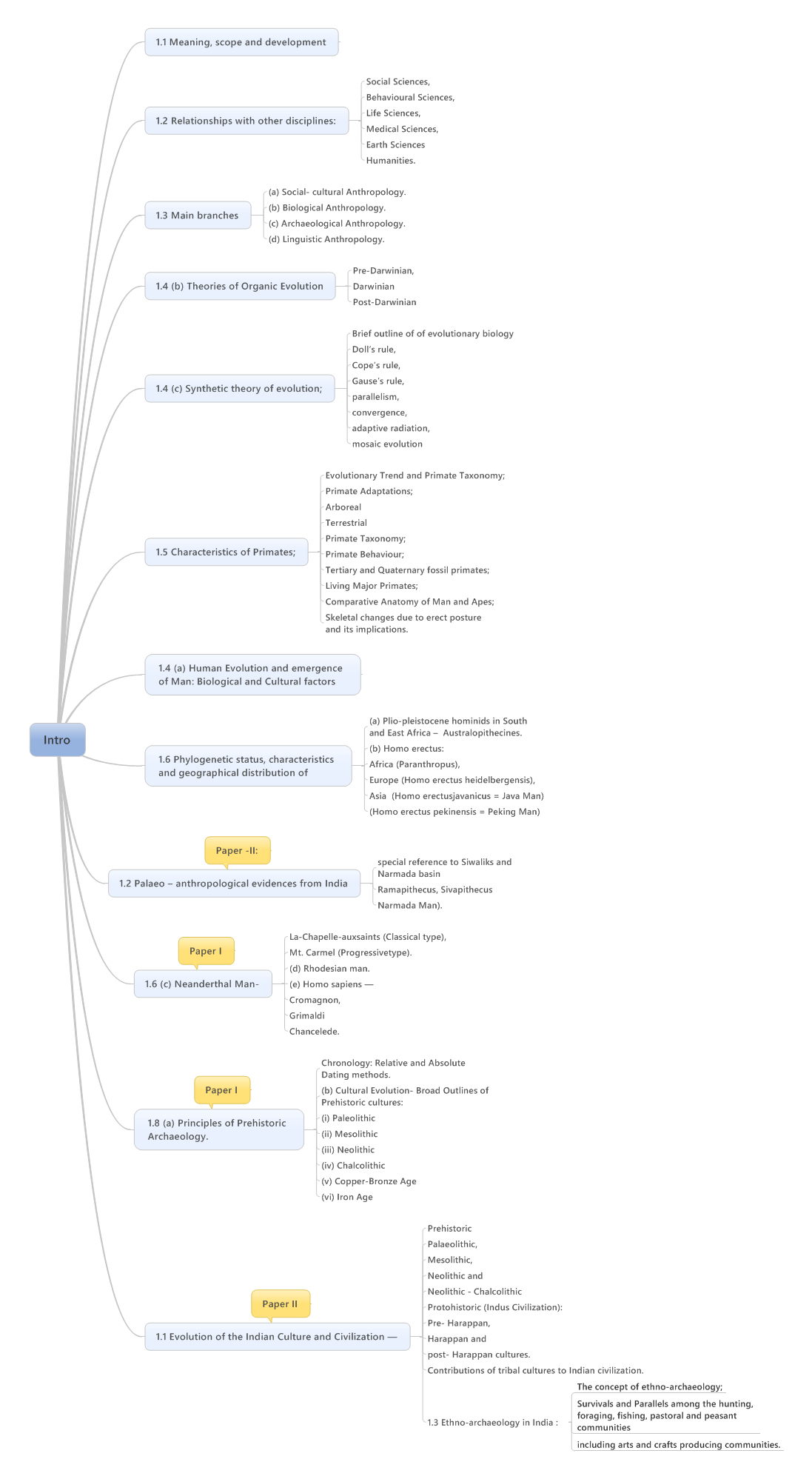
2 Biology
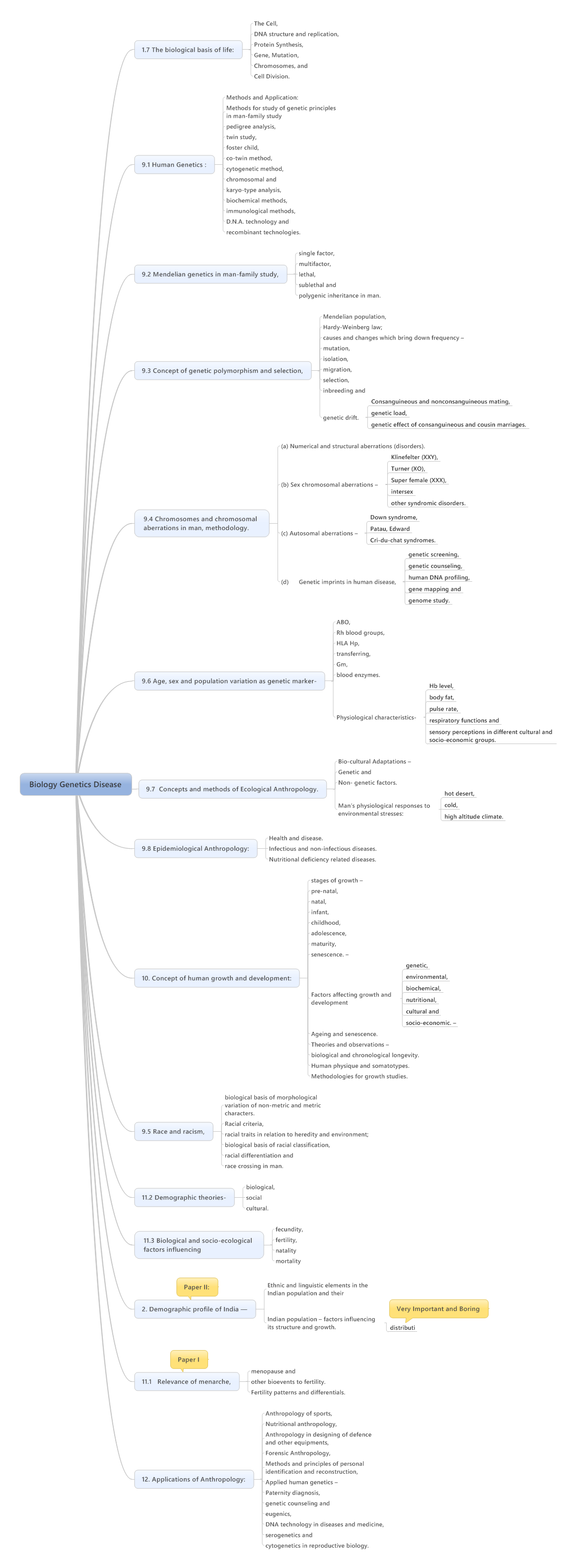
3 Research
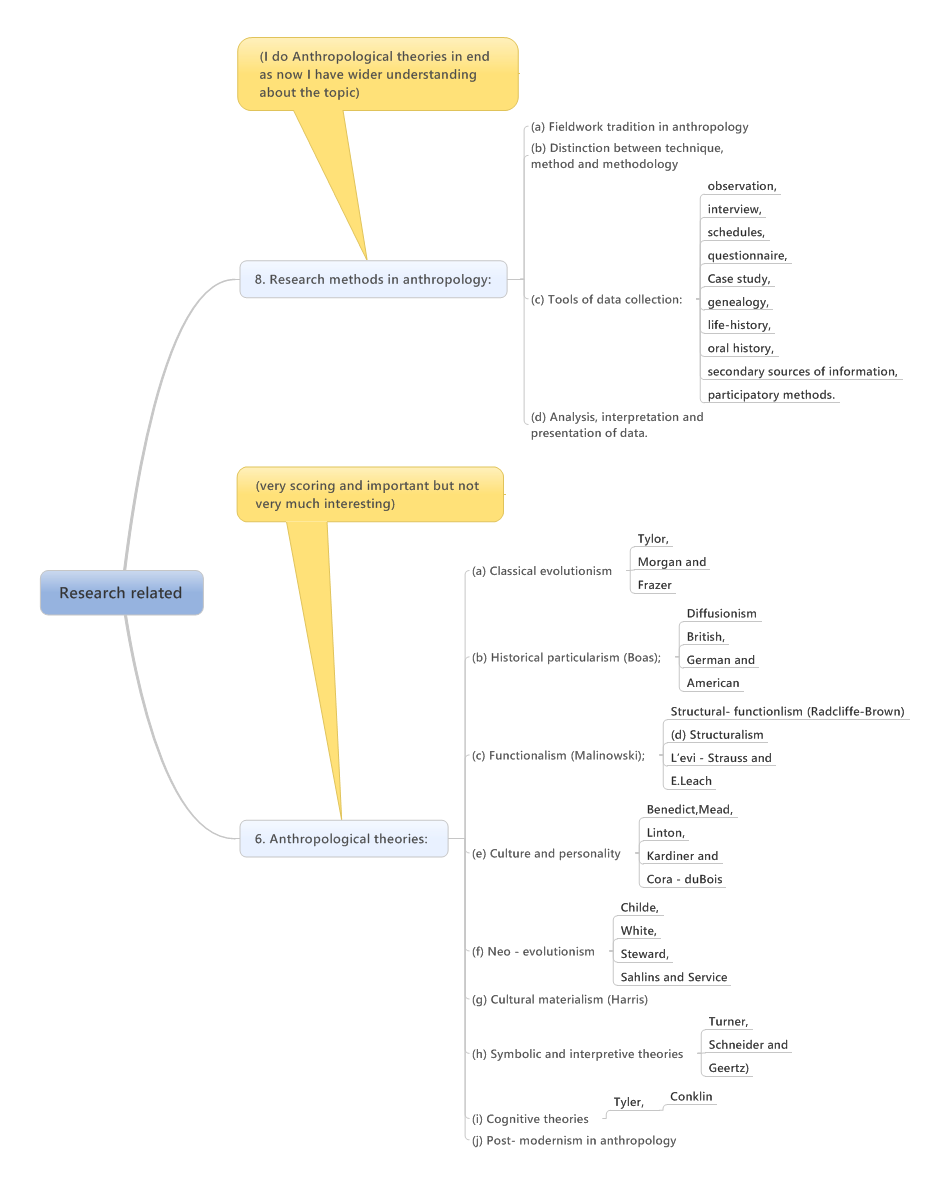
4 Caste
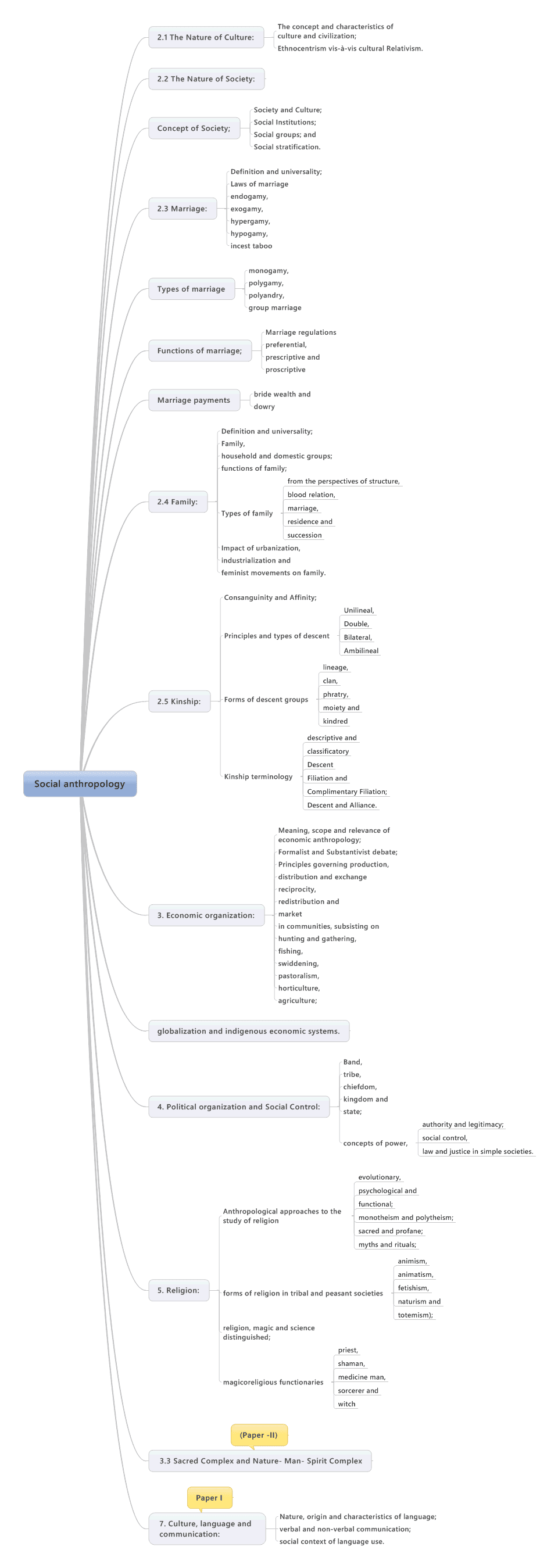
5 Tribals

![[Studyplan] CDS Maths Paper: Number System, Quadratic Equations, Surds, Indices, Linear Equation (Part 1 of 3) for UPSC Combined Defense service exam](https://mrunal.org/wp-content/uploads/2012/10/icon-plan-500x383.png)
![[Studyplan] MPPSC Mains GS1 and GS2: Priority Revision topics](https://mrunal.org/wp-content/uploads/2013/09/i-mppsc-500x383.png)
Sir How can I get the study materials for Anthropology in hindi language. .?
sir ,
how can study the anthropology for IAS exam one of my optional subject without coaching?
i took my optional subject as anthrapology can u plz suggest best books so that i can make my optional easy
Can anyone guide me regarding the best coaching institute for anthropology optional- in terms of concept as well as notes.
Sir where can i get the muniratnam sir’s anthropology material
SIR kindly tell me is there any video lectures for anthropology. Which can be more useful for me. And the best notes for anthropology, which I refer because I am preparing with my job.
Hi sir, i have completed my mba& preparing for civils, i thought of opting for commerce, but in hyd coaching is not avilable for that, iam thinking to go for telugu literature or anthropology or public administration, which one is suggestible, three are new things for me, one more thing iam interested in know culture & all, i have less time with me, will u plg suggest me which one is best.
Iam preparing for ssc & civils, ssc is like backup for civils, what is the best time to start preparation for civils if we want to crack it in 2018.
Sir hindi sahitya ke materials ke liye sites btaye.
HINDI LITERATURE IGNOU NOTES
Sir hindi sahitya ke materials ke liye sites btaye
Pls post the link for ANTHROPOLOGY IGNOU material
Hai to all I am studying degree in open university.took zoology,English and public administration.as my subjects.iam interested in civil services.I have interest in Anthropology and public administration.do am I eligible like that.is it okk
Sir, I’m an arts student.. Will it be good for me if I take anthropology as an optional? I have heard that its good for science students without any clarification if arts students can also take it. I find the syllabus very interesting.