
Table of Contents
Mains-PYQ-GSM1–2026-Digital-Social-Empowerment
- Do you think digital technology promotes social empowerment? Explain with examples. (10m, 150words, CSM’26)
- क्या आपको लगता है कि डिजिटल तकनीक सामाजिक सशक्तिकरण को बढ़ावा देती है? उदाहरणों सहित स्पष्ट करें। (10m, 150words, CSM’26)
✍️ Intro
- (Origin) Since the LPG reforms, India’s IT sector became a major driver of GDP, but grassroot-level digital penetration really accelerated during the Corona lockdown of 2020, and further with the arrival of ChatGPT in 2022.
📲 Body1: How digital technology helped social empowerment
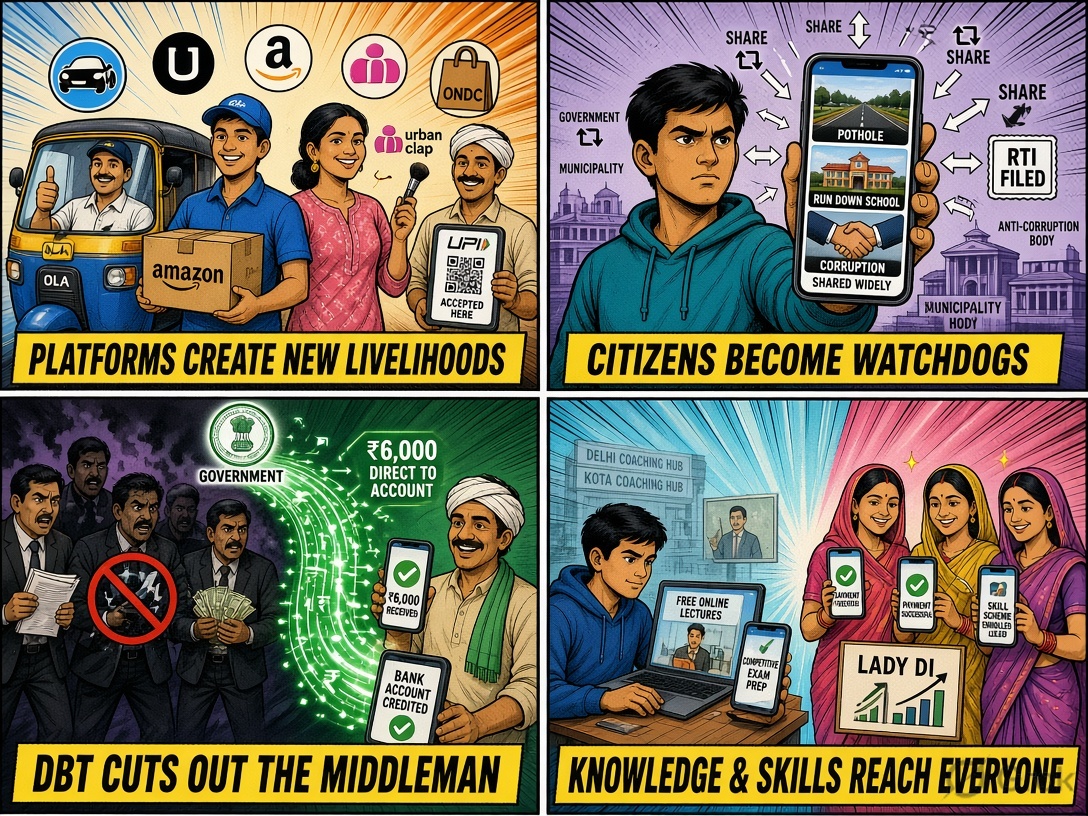
- Job creation: apps like UrbanClap for hiring maids, cooks, and beauticians; gig jobs through Ola-Uber drivers and Amazon-Flipkart delivery workers; UPI for small merchants.
- Even a small family-owned business can list and sell products through e-commerce/UPI, helped further by the government’s own ONDC platform.
- Recognition of rights: online filing of RTI applications, and proactive disclosure rules requiring departments to publish annual reports on their websites.
- Social media has made citizens into watchdogs — potholes, poor school infrastructure, or corruption now get flagged and shared, creating public pressure for action.
- DBT of subsidies directly into beneficiary accounts, such as ₹6,000 a year to farmers under PM-KISAN, cuts out middlemen and reduces leakages.
- Digital technology has also helped women’s empowerment specifically: SHG women using digital payment apps and smartphones for Lakhpati Didi/Drone Didi type schemes
- online skill-training (Skill India digital, YouTube tutorials) for those who couldn’t earlier travel to a training centre.
- Education: students in small towns now access free lectures, exam material, competitive-exam coaching online, reducing the earlier advantage held only by students in big coaching hubs such as Delhi for UPSC and Kota for IIT/NEET.
⚠️ Body2: Counter-arguments / limitations
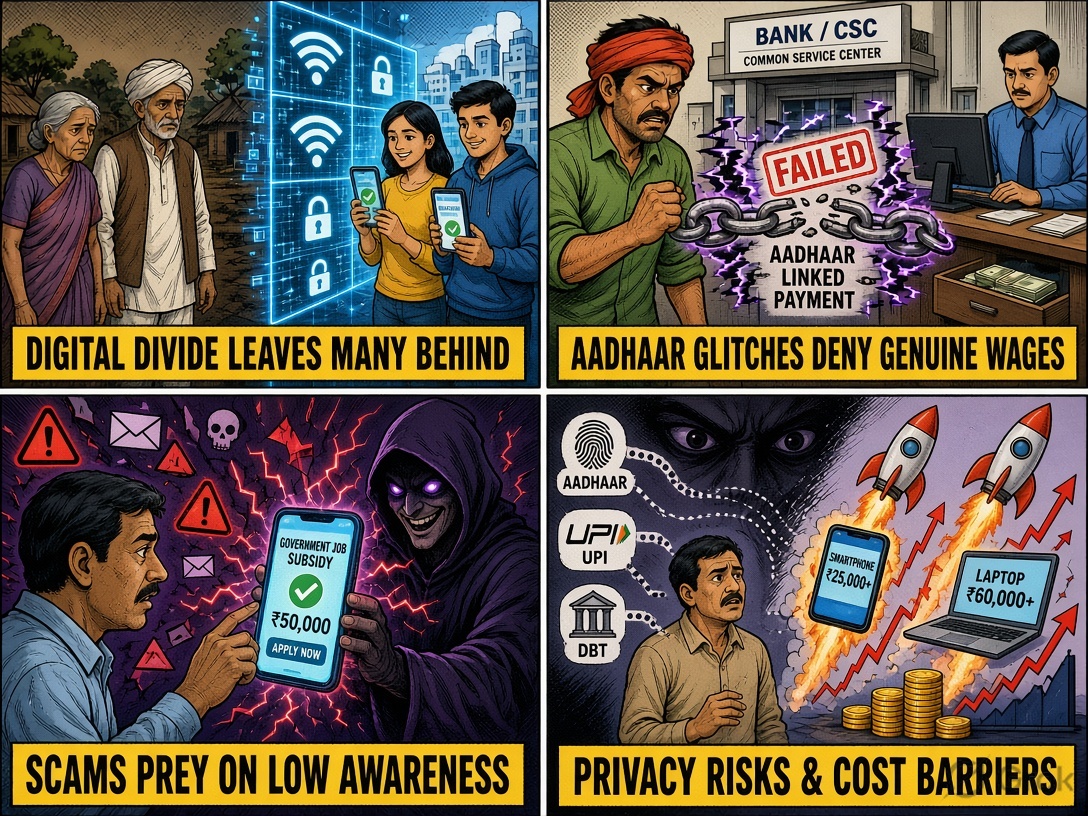
- Push towards paperless, digital-only transactions can exclude beneficiaries who lack digital literacy or devices — the digital divide is real, especially in rural and elderly populations.
- Many government websites are still not disability-friendly.
- Aadhaar-bank linkage has caused operational problems in the release of MGNREGA wages, sometimes denying genuine workers their due payment.
- Cyber scams in the name of government jobs or subsidies are common, and many citizens lack full digital awareness to protect themselves.
- Surveillance and privacy risk: greater digital footprint of citizens (Aadhaar, DBT, UPI) also raises concerns about data misuse and voter-profiling.
- AI-data centre boom has caused shortage of chips, RAM, memory cards and inflated the prices of consumer level smartphones, and laptops. This will also prevent some poor people from accessing all the benefits of digital technology.
✍️ Conclusion
- Digital technology has clearly expanded access to jobs, rights, and welfare for ordinary citizens.
- But its benefits remain uneven until digital literacy, ownership smartphones/PC, and data protection gaps are addressed.
- Only then can it become a genuine tool of social empowerment rather than a new source of exclusion.
📝 हिंदी अनुवाद (Hindi Translation)
✍️ परिचय
- (उत्पत्ति) LPG सुधारों के बाद से भारत का IT क्षेत्र GDP का प्रमुख चालक बन गया, लेकिन घाट-स्तर पर डिजिटल पहुंच वास्तव में 2020 के कोरोना लॉकडाउन के दौरान तेजी से बढ़ी, और 2022 में ChatGPT के आने के साथ और भी बढ़ गई।
📲 मुख्य भाग 1: डिजिटल तकनीक ने सामाजिक सशक्तिकरण में कैसे मदद की
- नौकरी सृजन: UrbanClap जैसी ऐप्स घरेलू काम, खाना पकाने और सौंदर्य सेवाओं के लिए; Ola-Uber ड्राइवर्स और Amazon-Flipkart डिलीवरी कर्मियों के माध्यम से गिग काम; छोटे व्यापारियों के लिए UPI।
- एक छोटा पारिवारिक व्यवसाय भी ई-कॉमर्स/UPI के माध्यम से उत्पाद सूचीबद्ध और बेच सकता है, जिसे सरकार के अपने ONDC प्लेटफॉर्म द्वारा और भी अधिक समर्थन मिलता है।
- अधिकारों की मान्यता: RTI आवेदनों की ऑनलाइन फाइलिंग, और सक्रिय प्रकटीकरण नियम जो विभागों को अपनी वार्षिक रिपोर्ट वेबसाइटों पर प्रकाशित करने के लिए बाध्य करते हैं।
- सोशल मीडिया ने नागरिकों को पहरेदार बना दिया है – सड़कों के गड्ढे, खराब स्कूल ढांचा, या भ्रष्टाचार अब सोशल मीडिया पर साझा किया जाता है, जिससे कार्रवाई के लिए जनता का दबाव बनता है।
- Direct Benefit Transfer (DBT) सब्सिडी सीधे लाभार्थी खातों में, जैसे PM-KISAN के तहत किसानों को ₹6,000 प्रति वर्ष, बिचौलियों को समाप्त करता है और रिसाव कम करता है।
- डिजिटल तकनीक ने महिलाओं के सशक्तिकरण में विशेष रूप से मदद की है: SHG महिलाएं Lakhpati Didi/Drone Didi जैसी योजनाओं के लिए डिजिटल भुगतान ऐप्स और स्मार्टफोन का उपयोग कर रही हैं।
- ऑनलाइन कौशल-प्रशिक्षण (Skill India डिजिटल, YouTube ट्यूटोरियल) जो पहले प्रशिक्षण केंद्र तक नहीं जा सकते थे।
- शिक्षा: छोटे शहरों के छात्र अब मुफ्त व्याख्यान, परीक्षा सामग्री, प्रतियोगी परीक्षा कोचिंग ऑनलाइन तक पहुंच सकते हैं, जो पहले केवल बड़े कोचिंग हब्स जैसे UPSC के लिए दिल्ली और IIT/NEET के लिए कोटा में रहने वाले छात्रों का लाभ था।
⚠️ मुख्य भाग 2: विरोधाभास / सीमाएं
- कागज-रहित, केवल डिजिटल लेनदेन की ओर जाने से वे लाभार्थी बाहर रह जाते हैं जिनके पास डिजिटल साक्षरता या डिवाइस नहीं हैं – डिजिटल विभाजन वास्तविक है, खासकर ग्रामीण और बुजुर्ग आबादी में।
- कई सरकारी वेबसाइटें अभी भी विकलांग-अनुकूल नहीं हैं।
- आधार-बैंक लिंकेज ने MGNREGA मजदूरी की रिहाई में संचालन संबंधी समस्याएं पैदा की हैं, कभी-कभी असली मजदूरों को उनके वेतन से वंचित कर देते हैं।
- साइबर स्कैम सरकारी नौकरियों या सब्सिडी के नाम पर आम हैं, और कई नागरिकों को खुद को सुरक्षित रखने के लिए पूर्ण डिजिटल जागरूकता की कमी है।
- निगरानी और गोपनीयता का जोखिम: नागरिकों का अधिक डिजिटल फुटप्रिंट (आधार, DBT, UPI) डेटा दुरुपयोग और मतदाता-प्रोफाइलिंग के बारे में भी चिंता बढ़ाता है।
- AI-डेटा सेंटर बूम ने चिप्स, RAM, मेमोरी कार्ड की कमी पैदा की है और उपभोक्ता स्तर के स्मार्टफोन और लैपटॉप की कीमतों में वृद्धि की है। यह कुछ गरीब लोगों को डिजिटल तकनीक के सभी लाभों तक पहुंचने से भी रोकेगा।
✍️ निष्कर्ष
- डिजिटल तकनीक ने स्पष्ट रूप से सामान्य नागरिकों के लिए नौकरियों, अधिकारों और कल्याण तक पहुंच का विस्तार किया है।
- लेकिन इसके लाभ तब तक असमान रहते हैं जब तक डिजिटल साक्षरता, स्मार्टफोन/PC के स्वामित्व, और डेटा सुरक्षा की खामियों को दूर नहीं किया जाता।
- तभी यह सामाजिक सशक्तिकरण का सच्चा उपकरण बन सकता है, न कि बहिष्करण का एक नया स्रोत।
![[Mains Model Ans] What do you mean by Digital Rupee? In this context, explain the working and progress of India’s Central Bank Digital Currency (CBDC). (10m, 150words, CSM’26)](https://mrunal.org/wp-content/uploads/2026/08/PROOF_1A1_GSM3-Eco-Digital-Rupee-CBDC-500x383.jpg)
![[Mains Model Ans] Examine the view that financial inclusion is an integral part of social and economic inclusion in a country like India. Also throw light on the usefulness of the R.B.I.’s Financial Inclusion Index. (10m, 150words, CSM’26)](https://mrunal.org/wp-content/uploads/2026/08/PROOF_1D_GSM3_Eco-Financial-Inclusion-Index-500x383.jpg)
![[Mains Model Ans] Examine whether the constitutional mandate of rights-based welfare can be effectively realised amid non-integrated governance and minimal public investment. (15m, 250words, CSM’26)](https://mrunal.org/wp-content/uploads/2026/08/PROOF_2C_GSM2-Rights-Based-Welfare-500x383.jpg)
![[Mains Model Ans] “The centre of global trade is gradually shifting from the Atlantic region to the Indo-Pacific region.” Examine this statement. (15m, 250words, CSM’26)](https://mrunal.org/wp-content/uploads/2026/08/PROOF_3A_GSM1-Indo-Pacific-Trade-Shift-500x383.jpg)