Table of Contents
Mains-PYQ-GSM1–2026-Planned-Economy
- The model of planned economy was adopted in India to address the regional imbalances left behind by colonial rule. Comment. (15m, 250words, CSM’26)
- नियोजित अर्थव्यवस्था के मॉडल को भारत में औपनिवेशिक शासन से विरासत में मिली क्षेत्रीय असमानताओं को दूर करने के लिए अपनाया गया था। टिप्पणी करें। (15m, 250words, CSM’26)
✍️ Intro
- (Origin) After Independence, Nehru, inspired by the USSR’s planned economy model, set up the Planning Commission in 1950 to design a five-year plan for the economy that was shattered by 200 years of colonial exploitation and the Second World War.
🚂 Body1: How colonial rule caused regional imbalance

- The three Presidency headquarters—Madras, Bombay, and Calcutta—received most colonial attention, with ports, railways, banks, colleges, and cantonments.
- Colonial infrastructure was designed for troop movement and raw material export to Britain, neglecting balanced development.
- Coastal towns received banks, rail links, and modern education first, leaving interior regions with limited industrial growth opportunities.
- Therefore, On the eve of Independence, India had industrialized coastal areas and an underdeveloped hinterland.
🏗️ Body2: How FYPs tried to fix this

- Extending railway and road connectivity to interior areas for faster transportation of seeds, fertilizers, medicines, and finished products.
- Industrial licensing policy provided faster approvals, tax concessions, and cheaper electricity to units in backward areas, promoting regional equity.
- Reserved sectors for small-scale and village/cottage industries, offering loans and subsidies.
- This enabled entrepreneurs in backward regions to start businesses, expanding economic activity beyond colonial centers.
- Some States in North East and Himalayan regions received greater funding under the Gadgil-Mukherjee formula of Planning Commission, granting them Special Category Status.
⚖️ Body3: But regional imbalance wasn’t the only reason
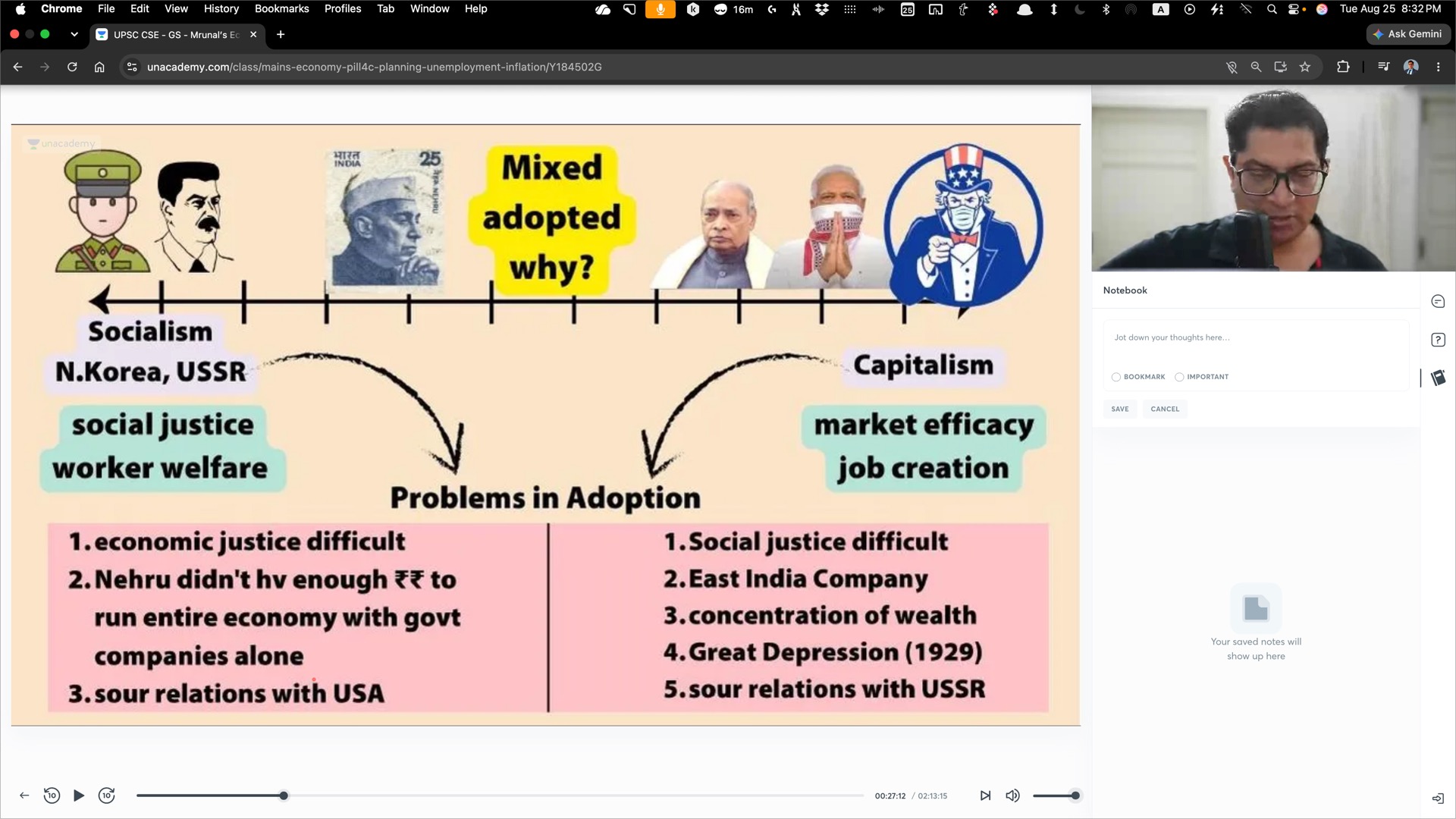
- PM Nehru’s planning was shaped more by the socialist USSR model hence the emphasis on state ownership of heavy industry (steel, power, machine-building).
- Equity in the FYPs also meant land reforms, abolishing zamindari, nationalisation of banks to ensure greater access to capital for the poor people, so these steps were mainly driven by social justice goal, not ‘fixing regional imbalance’
- Import substitution was a national self-reliance strategy applied uniformly across India, not a region-specific correction.
✍️ Conclusion
Thus, planning in India was driven by many goals of growth, equity, import substitution, among others. Correcting the regional imbalance was an important, but not the only goal of the FYPs.
Yes Covered in Mrunal’s Economy Lectures
Click me to Join Mrunal’s courses at Unacademy
📝 हिंदी अनुवाद (Hindi Translation)
✍️ परिचय
- (उत्पत्ति) स्वतंत्रता के बाद, नेहरू, यूएसएसआर की नियोजित अर्थव्यवस्था के मॉडल से प्रेरित होकर, 1950 में योजना आयोग की स्थापना की ताकि अर्थव्यवस्था के लिए एक पंचवर्षीय योजना तैयार की जा सके जो 200 साल के औपनिवेशिक शोषण और द्वितीय विश्व युद्ध से तबाह हो गई थी।
🚂 मुख्य भाग 1: औपनिवेशिक शासन ने क्षेत्रीय असंतुलन कैसे पैदा किया
- तीन प्रेसीडेंसी मुख्यालय – मद्रास, बंबई और कलकत्ता – को अधिकांश औपनिवेशिक ध्यान मिला, बंदरगाह, रेलवे, बैंक, कॉलेज और छावनियों के साथ।
- औपनिवेशिक अवसंरचना सैनिकों की गतिविधि और कच्चे माल के निर्यात के लिए डिजाइन की गई थी, संतुलित विकास को नजरअंदाज करते हुए।
- तटीय शहरों को पहले बैंक, रेल लिंक और आधुनिक शिक्षा मिली, जिससे आंतरिक क्षेत्रों में औद्योगिक विकास की सीमित संभावनाएं रहीं।
- इसलिए, स्वतंत्रता की पूर्व संध्या पर, भारत के पास औद्योगिकृत तटीय क्षेत्र और अविकसित आंतरिक क्षेत्र थे।
🏗️ मुख्य भाग 2: पंचवर्षीय योजनाओं ने इसे कैसे ठीक करने की कोशिश की
- आंतरिक क्षेत्रों तक रेलवे और सड़क संपर्क का विस्तार, बीजों, उर्वरकों, दवाओं और तैयार माल के तेजी से परिवहन के लिए।
- औद्योगिक लाइसेंसिंग नीति पिछड़े क्षेत्रों में इकाइयों को तेजी से अनुमोदन, कर छूट और सस्ती बिजली प्रदान करती थी, क्षेत्रीय इक्विटी को बढ़ावा देती थी।
- छोटे पैमाने और गांव/कुटीर उद्योगों के लिए आरक्षित क्षेत्र, ऋण और सब्सिडी प्रदान करते हैं।
- इससे पिछड़े क्षेत्रों के उद्यमियों को व्यवसाय शुरू करने में सक्षम बनाया, औपनिवेशिक केंद्रों से परे आर्थिक गतिविधि का विस्तार किया।
- उत्तर-पूर्व और हिमालयी क्षेत्रों के कुछ राज्यों को योजना आयोग के गडगिल-मुखर्जी फॉर्मूले के तहत अधिक फंडिंग मिली, जिससे उन्हें विशेष श्रेणी का दर्जा दिया गया।
⚖️ मुख्य भाग 3: लेकिन क्षेत्रीय असंतुलन ही एकमात्र कारण नहीं था
- पीएम नेहरू की योजना समाजवादी यूएसएसआर मॉडल से अधिक प्रभावित थी, इसलिए भारी उद्योग (स्टील, बिजली, मशीन-निर्माण) में राज्य के स्वामित्व पर जोर दिया गया।
- पंचवर्षीय योजनाओं में इक्विटी का अर्थ भूमि सुधार, जमींदारी को समाप्त करना, बैंकों का राष्ट्रीयकरण ताकि गरीब लोगों के लिए पूंजी तक अधिक पहुंच सुनिश्चित की जा सके, इसलिए ये कदम मुख्य रूप से सामाजिक न्याय के लक्ष्य से प्रेरित थे, न कि ‘क्षेत्रीय असंतुलन को ठीक करने’ से।
- आयात प्रतिस्थापन एक राष्ट्रीय आत्मनिर्भरता की रणनीति थी जो पूरे भारत में समान रूप से लागू की गई थी, क्षेत्र-विशिष्ट सुधार नहीं।
✍️ निष्कर्ष
इस प्रकार, भारत में योजना वृद्धि, इक्विटी, आयात प्रतिस्थापन और अन्य लक्ष्यों द्वारा संचालित थी। क्षेत्रीय असंतुलन को सुधारना एक महत्वपूर्ण था, लेकिन पंचवर्षीय योजनाओं का एकमात्र लक्ष्य नहीं था।